
A Beginner's Guide to Wall Panelling: Which Type Suits Your Room?
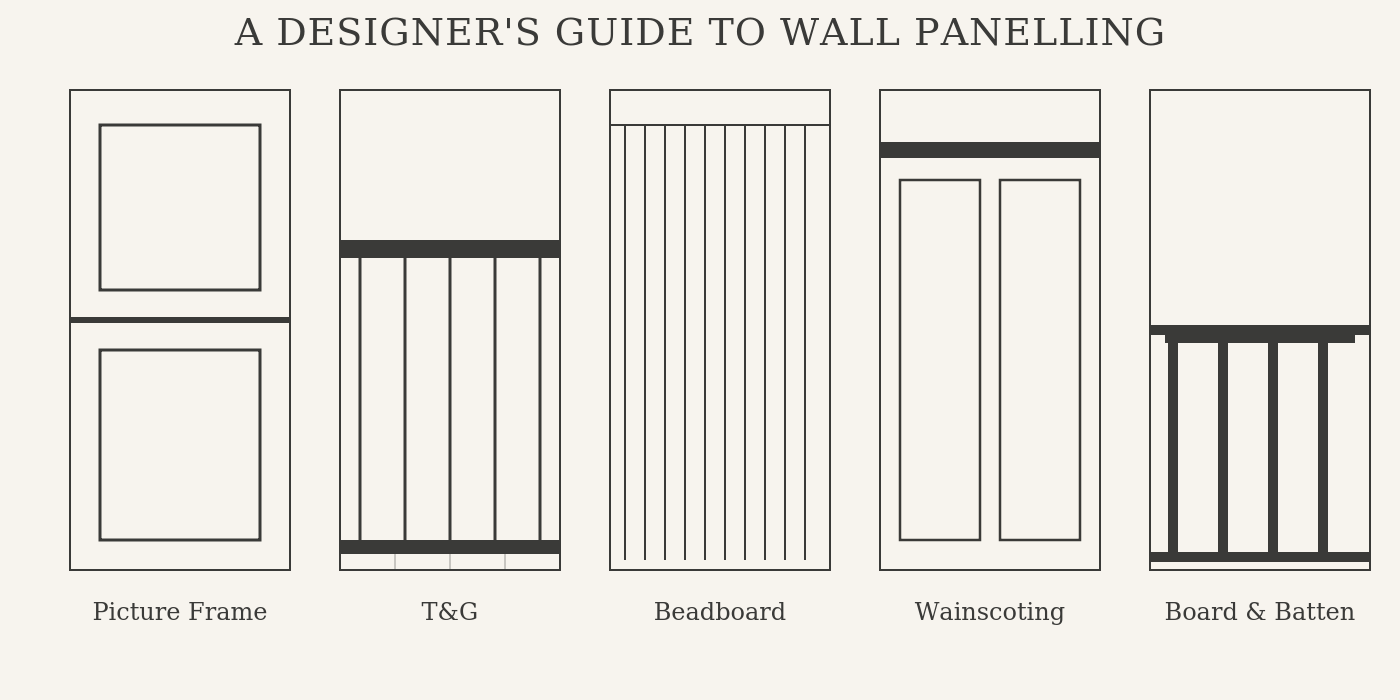
If you've ever scrolled through Pinterest wondering "which type of panelling is that, and would it work in my house?" — this one's for you.
Wall panelling is one of the easiest ways to add character, depth, and a finished feel to a room. But not all panelling is the same, and the style you choose can completely change the personality of a space. Here's a quick guide to the main types, where they work best, and a real project where I recently put one of them to use.
Picture Frame / Panel Moulding
This is one of my personal favourites. Simple rectangular frames of moulding applied directly to the wall, painted the same colour as the wall for a subtle, elegant look, or a contrasting colour for more impact.
Best for: hallways, living rooms, bedrooms. Why I love it: it's timeless. It works in a new build just as well as a period home, and it doesn't compete with your furniture or art — it just quietly elevates the whole room.
Board & Batten
Vertical boards (battens) applied over a base panel, usually running from floor to about a third or halfway up the wall. It has a slightly more casual, cottage feel than picture frame moulding.
Best for: bedrooms, bathrooms, kids' rooms. Worth noting: I personally wouldn't use this in a formal entryway — it can read a little too casual for a first impression space. Save it for rooms with a relaxed, cosy feel.
Beadboard
Narrow, vertical grooved panels — often what people picture when they think of a classic country or coastal bathroom.
Best for: bathrooms, utility rooms, mudrooms. Why it works: it's practical as well as pretty — the grooved surface holds up well in high-moisture, high-traffic spaces.
Wainscoting (Dado Rail Panelling)
Panel moulding applied to the lower third of a wall, finished with a dado rail along the top. This is a classic, so it's genuinely versatile — it works with traditional, modern, farmhouse, and coastal interiors alike.
Best for: hallways, dining rooms, and honestly — anywhere. One thing I'll always say: a hallway without some kind of moulding often feels a little unfinished. It doesn't need to be elaborate, but that lower-wall detail makes a real difference to how considered a space feels.
A Few Ground Rules
Wherever you're adding panelling, keep these in mind:
Measure your own space. Standard proportions (panel height, rail width, spacing) are a great starting point, but every room's ceiling height and existing features change what looks right.
Think about the room's purpose first, style second. A bathroom needs different practical properties than a hallway, even if you love the same look in both.
Crown moulding is the one I'd never skip. Regardless of which wall panelling style you choose, moulding where the wall meets the ceiling is what makes a room feel truly finished.